




Put simply, mitigation is the work of holding damage to its current size. It is not the repair. It is everything done before the repair to protect what is still sound. Our Syracuse crew mitigates a loss in four moves: control the source, extract the water, contain the wet zone and stabilize the building. Good mitigation makes the later repair smaller, and now and then makes it unnecessary.
Many homeowners treat restoration and mitigation as one and the same. Each is its own phase of the job. During mitigation, the urgent part, the loss is halted, its spread is limited and the home is made stable. Restoration is what comes after: drying is confirmed, and damaged drywall, flooring and finishes are repaired or rebuilt. Because an insurer lists each one separately as well, knowing where you stand in the process is helpful.
Four tasks make up most mitigation visits. First is source control, which keeps more water from coming in. Two: extract whatever water is standing. Three: contain the area with plastic sheeting and managed airflow, so clean rooms stay free of moisture and contaminants. Fourth is stabilization: unsalvageable materials come out, surfaces receive antimicrobial treatment, and dehumidifiers and air movers are placed. Along the way, your belongings and furniture get moved or set up on blocks to keep them safe.
How Our Water Damage Mitigation Works
We follow a proven process to ensure every job is completed to the highest standards. Here's how we handle water damage mitigation from start to finish:
Stop the Water Source
The supply gets shut off, the broken line capped, or the opening letting water in tarped and boarded. When the permanent repair calls for a roofer or plumber, we help schedule it.
Remove Standing Water
We extract standing water using pumps and extraction units, then check carpet and its padding. Getting bulk water out quickly does more to limit damage than any amount of drying equipment alone.
Set Up Containment
Plastic barriers and controlled airflow separate wet rooms from dry ones. That way dust, humidity and contaminants do not move through the home during the work.
Stabilize the Structure
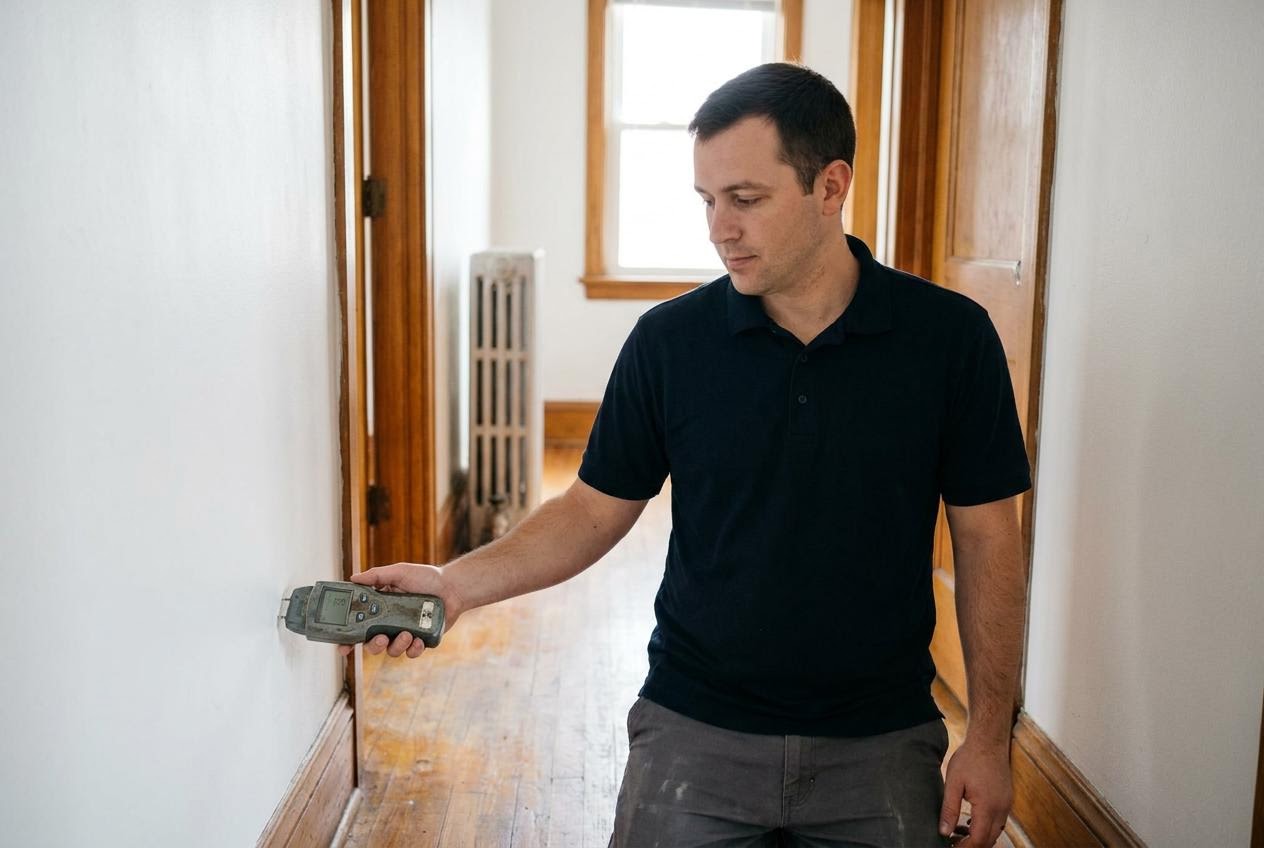
We remove what cannot be saved, treat surfaces with antimicrobial, and place dehumidifiers and air movers. Moisture readings are recorded on every visit until the structure can be repaired, typically in 3 to 5 days.
Ready to Solve Your Water Damage Mitigation Problem?
Get a free estimate from our expert team today.
Get Help: (631) 535-3026Warning Signs for Water Damage Mitigation
Catching these issues early helps you avoid costly problems and protect your property. Here are the most common indicators that it's time to call a professional:
- A plumber fixed the pipe but nobody has dealt with the water.
- Since the leak you have noticed puffed-up baseboards or gaps opening behind them.
- The house feels muggy and window glass is wet with condensation since the leak.
- An adjuster or agent said you must reasonably limit additional damage.
- A leak has been stopped but floors, walls or cabinets are still wet.
- Underfoot the carpet is spongy because the padding below holds water.
- An opening in the roof or at a window lets rainwater enter the building.
Early Action Saves Money
What seems like a minor issue today can turn into a major expense tomorrow. Call Syracuse Restoration at (631) 535-3026 at the first sign of trouble.
How to Prevent Water Damage Mitigation Problems
A little prevention goes a long way in avoiding expensive restoration emergencies. Here are our expert recommendations:
- An automatic valve on the main line can cut the water as soon as it detects a leak.
- Before heavy rain returns, caulk openings at doors, windows and roof penetrations.
- Replace rubber washing machine hoses with braided steel lines every five years or so.
- Clean the gutters regularly, and aim downspouts so they discharge away from the foundation.
- Schedule an annual water heater inspection and swap the unit out before its tank gives way.
- Find the main water valve and make sure it has not seized.
Water Damage Mitigation FAQ
Questions About Water Damage Mitigation?
We provide honest advice and free estimates on all water damage mitigation work.
Get Help: (631) 535-3026Should You DIY or Call a Pro?
While some minor restoration tasks can be handled by handy homeowners, most water damage work requires professional expertise, specialized equipment, and proper safety training. Consider the following comparison:
| Factor | DIY Approach | Professional Service |
|---|---|---|
| What stays or goes | Judging by look and feel | Readings decide what stays or goes |
| Source control | Close a valve, fingers crossed | Source confirmed, isolated and documented |
| Knowing when it is dry | Assume a few days was enough | Moisture tracked until numbers are normal |
| Contaminated water | Wiping obvious spots with bleach | Antimicrobial matched to water category |
| Water removal | Wet vac and a stack of towels | Pumps and extractors clear bulk water |
Why Water Damage Mitigation Is Not a DIY Job
Fast decisions, one after another, are what mitigation consists of. Can this section of drywall dry in place, or does it need cutting out? Has the water shifted category since the leak started, and is it Category 1, 2 or 3 now? Should the toe kick under the cabinets be pulled? We answer those questions with training and moisture readings rather than by the look or feel of a surface.
There is a claim-related reason to do mitigation right as well. Under most policies you must act reasonably to keep the damage from growing, with proof that you did. We photograph conditions on arrival, record moisture readings daily and keep a list of anything removed. Together those records show the water's effect and our response to it. Whoever handles repairs then begins from a known condition, and nothing wet ends up sealed behind new wallboard.
Schedule Your Water Damage Mitigation Service
The sooner you call, the sooner we can help. Reach Syracuse Restoration for same-day service.
Call (631) 535-3026 Now